How Does Label Printing Increase Warehouse Efficiency?

How Does Label Printing Increase Warehouse Efficiency?
Modern warehouse operations face mounting pressure to process more orders with greater accuracy while keeping costs under control. In this challenging environment, label printing has become a key tool that changes how warehouses manage stock and shipments. Rather than viewing labelling as a simple administrative task, forward-thinking warehouse managers now recognise it as a strategic asset that directly influences productivity metrics and customer satisfaction levels, which ultimately determines the long-term success of their operations. This guide examines how effective label printing systems improve warehouse operations and offers practical implementation strategies for British businesses.
While physical warehouse infrastructure remains crucial, the digital backbone supporting daily operations deserves equal attention. Reliable email hosting services ensure that shipping confirmations, inventory alerts, and supplier communications flow seamlessly between departments. This digital connectivity complements physical labelling systems by enabling rapid information exchange across the entire supply chain network.
As warehouse operations become increasingly connected across international supply chains, many organisations also need to ensure that their logistics systems align with NATO interoperability standards. Standardised identification, tracking, and labelling practices improve communication between partners, support accurate asset management, and help maintain consistent operational procedures across multiple facilities and jurisdictions.
Why Label Printing Matters for Warehouse Operations
Accurate product identification stands at the heart of every successful warehouse operation. When items arrive at a storage facility without proper labelling, the effects spread across the entire supply chain. Staff members waste valuable time searching for products, picking errors increase dramatically, and customer complaints multiply. Professional label printing addresses these challenges by creating a systematic approach to inventory management that eliminates guesswork and human error.
Reducing Search Time and Picking Errors
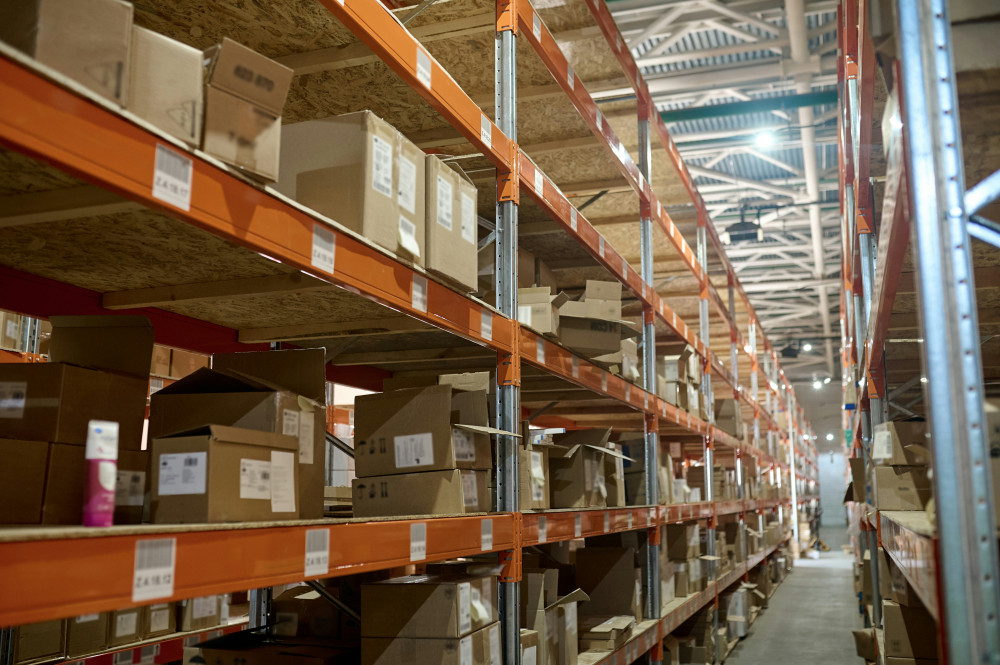
Warehouse workers who are employed in facilities that lack proper labelling systems, which would otherwise allow for quick and accurate product identification, can spend up to thirty percent of their entire shift simply locating products rather than completing other essential tasks. Standardised labels with clear barcodes or QR codes allow staff to identify products instantly and complete pick lists much faster. This matters most during peak seasons when every minute counts.
Supporting Inventory Accuracy and Stock Control
Labels provide the foundation for strong inventory tracking systems that monitor stock accurately. Consistent labels make cycle counting simple and reveal discrepancies fast. Managers gain real-time visibility into stock levels, enabling better purchasing decisions and reducing the capital tied up in excess inventory. Labelling programmes typically achieve over ninety-five percent inventory accuracy.
Key Benefits of Automated Label Systems in Storage Facilities
Switching to automated label printing provides clear, measurable benefits. Beyond the obvious time savings, automated systems deliver a level of consistency that manual processes simply cannot achieve. Every label emerges with identical formatting, correct information placement, and scannable barcodes that work smoothly with warehouse management software, which ensures that inventory tracking remains accurate throughout the supply chain.
Organisations seeking to understand broader material handling improvements should explore tailored material handling solutions that enhance flexibility across their entire operation. Integrating label printing with other handling systems creates synergies that multiply individual benefits.
The main benefits of automated labelling include the following key points worth considering:
1. Consistent print quality ensuring reliable scanning rates above 99%
2. Reduced labour costs by eliminating manual label writing tasks
3. Integration with existing warehouse management platforms
4. Scalability to handle volume fluctuations without additional staffing
5. Error reduction through automated data population from central databases
Temperature-Sensitive and Specialised Labelling Requirements
Warehouses handling perishable goods, pharmaceuticals, or chemicals face additional labelling challenges that standard systems cannot address. Specialised thermal printers produce labels capable of withstanding extreme cold, moisture exposure, and chemical contact. These durable markers ensure that identification remains readable throughout the product lifecycle, from warehouse storage through final delivery. Companies managing temperature-controlled environments will find valuable insights in resources covering cold storage maintenance strategies for business continuity.
Compliance and Regulatory Considerations
British warehouses must work within complex regulatory frameworks that govern product labelling requirements, which are particularly demanding in the food, pharmaceutical, and hazardous materials sectors where strict compliance is essential. Automated printing systems can incorporate compliance templates, which are carefully designed to ensure that every label produced within the warehouse meets current legal requirements, thereby reducing the risk of regulatory violations and potential penalties. Template updates automatically apply regulatory changes to all future prints, preventing non-compliant labels.
Practical Steps to Implement Effective Label Printing
Successful implementation demands careful planning that accounts for current workflows, growth projections, and integration with existing systems. Auditing current labelling practices reveals problems and improvement opportunities. This assessment should examine label types currently in use, printing volumes, error rates, and staff time devoted to labelling tasks.
Following the completion of the audit process, organisations should carefully prioritise their efforts by addressing the highest-impact opportunities first, ensuring that resources are allocated to those areas where improvements will deliver the most significant and measurable benefits to overall operations. A phased rollout allows staff to adapt gradually to new systems and procedures, while also providing valuable opportunities to refine and improve processes before scaling the implementation across the entire facility. Training programmes require special focus, since even advanced printing technology offers little value when operators are not confident using it.
Selecting Appropriate Hardware and Software
Choose a label printer based on your specific operational needs, not just features. High-volume distribution centres benefit significantly from industrial-grade printers that are capable of producing thousands of labels daily, whilst smaller operations with more modest demands may find that desktop units are perfectly adequate for their needs. Software integration capability often proves more important than raw printing speed, as seamless data flow between systems eliminates manual entry and its associated errors.
How Digital Communication Tools Support Warehouse Labeling Workflows
Modern warehouse labelling extends far beyond the capabilities of physical printers alone, as it now encompasses sophisticated digital systems that effectively coordinate the flow of information across multiple internal departments and external business partners. When shipping labels generate automatically from order management systems, the resulting accuracy improvements cascade throughout downstream processes. Carriers receive consistent information, customers track shipments reliably, and returns processing becomes simple and direct.
Internal communication channels are equally important for keeping the labelling system working effectively. Staff members need clear procedures for reporting printer malfunctions, requesting label stock replenishment, and escalating unusual labelling requirements, which together form the essential framework that ensures operational continuity and prevents minor technical issues from developing into significant disruptions that could affect production schedules. By establishing dedicated communication pathways within an organization, companies can ensure that minor issues, which might otherwise be overlooked or delayed, receive the prompt attention they require before these small concerns have the opportunity to escalate and grow into significant production-halting problems.
Measuring the Impact of Label Printing on Warehouse Productivity
Quantifying labelling system benefits requires establishing baseline measurements before implementation and tracking relevant metrics consistently afterward. Industry resources such as those detailing key performance indicators for warehouse operations provide frameworks for meaningful measurement programmes. Common metrics include pick accuracy rates, items processed per labour hour, inventory accuracy percentages, and customer complaint frequencies related to shipping errors.
Performance reviews should assess both numerical data and qualitative feedback from warehouse employees. Operators frequently spot improvement opportunities that data alone might miss, and their feedback helps refine labelling processes gradually. This continuous improvement approach transforms label printing from a static system into an evolving capability that adapts and grows alongside changing business requirements, ensuring that operations remain aligned with organizational needs over time.
Your Path to Streamlined Warehouse Operations
Setting up effective label printing systems is one of the most accessible and impactful upgrades for British warehouse operators. The combination of reduced errors, faster processing times, and improved inventory visibility delivers returns that typically exceed implementation costs within months rather than years. Organisations that approach labelling strategically, investing in appropriate technology and comprehensive staff training, position themselves for sustained competitive advantage in increasingly demanding logistics markets. Whether managing a small distribution centre or overseeing a national warehousing network, the principles of effective label printing remain consistent: accuracy, consistency, and integration form the foundation for operational excellence.